 UCAS Oxbridge & medicine
 DAAD EPOS
 Fulbright Scholar
 Stipendium Hungaricum
 Sweden autumn 2027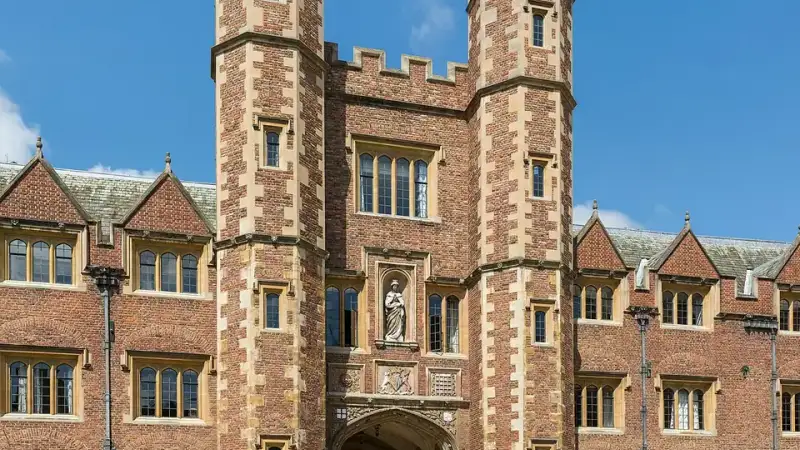
Gates Cambridge Scholarship: The Complete Guide For Pakistani Applicants
One of the most selective scholarships in the world, fully funding a master’s or PhD at Cambridge. What Gates looks for, the four criteria, the Gates statement, the department ranking, the interview and how Pakistani applicants have won it.
 Reading time23 min
 Sections35
 Updated9 October 2026
 Sources6 official
Photo: Diliff, CC BY-SA 3.0, via Wikimedia Commons
The 60-second version
Key takeaways · then go as deep as you like- 1Gates Cambridge funds the full cost of a postgraduate degree at Cambridge for people outside the UK: fees, a maintenance allowance, flights and visa costs.
- 2Around 80 scholarships a year are expected (about 55 in the international round); 95 new scholars were selected in 2025. Applications run into the thousands, so success rates are low single digits.
- 3There is no separate Gates portal: you apply to a Cambridge course and complete the Gates section of the same application, including a Gates statement and a Gates reference.
- 4Four criteria decide it: academic excellence, reasons for choosing the course, commitment to improving the lives of others, and leadership capacity.
- 5For 2027 entry, international deadlines were 8 December 2026 or 6 January 2027 depending on the course.
- 6Pakistanis have won Gates scholarships across education, genetics, South Asian studies, economics and more; there is no quota, only the strongest candidates.
~80
Scholarships expected a year
95
New scholars, 2025
£22,050
Maintenance 2025–26 (single)
Dec / Jan
International deadlines

Part 1 of 6
The basics
01Gates Cambridge In One Minute
The Gates Cambridge Scholarship was created in 2000 by a donation from the Bill & Melinda Gates Foundation to the University of Cambridge. Each year it funds outstanding applicants from outside the UK to pursue a full-time postgraduate degree at Cambridge: a one-year master’s (such as an MPhil), a second bachelor’s in some cases, or a PhD.
The scholarship is full cost. It covers the University Composition Fee, a maintenance allowance, flights at the start and end of the course, and inbound visa costs including the Immigration Health Surcharge. For 2025–26 the maintenance allowance was £22,050 for a single student over 12 months.
What makes Gates different from most scholarships is its mission: to build a global network of future leaders committed to improving the lives of others. Academic excellence gets you considered; commitment to others and leadership capacity win the award.
The short version
Gates Cambridge = full-cost master’s or PhD at Cambridge
- for applicants from outside the UK
- applied for inside your Cambridge course application
- judged on excellence, course fit, commitment to others and leadership.
02How Selective Is It?
Gates is one of the most selective scholarships in the world. The Trust expects to award around 80 full-cost scholarships a year, roughly 25 in the US round and 55 in the international round; in 2025 it selected 95 new scholars. Applications number in the thousands, and independent estimates put the international success rate around one to two percent.
~80
Expected awards a year
~55
International round
95
New scholars in 2025
~1–2%
Estimated success rate
Pakistanis do win. The British Council reported three Pakistani Gates scholars in one year (2016), in genetics, South Asian studies and other fields, and in 2025 a Pakistani educationist was selected for a PhD in education focused on girls’ schooling. LUMS and other Pakistani universities have celebrated alumni winners.

Counsellor’s tip: Because selection starts with your Cambridge department, the first and most important question is whether you are among the strongest applicants to your course. Gates cannot select you if the department does not rank you highly.
03What The Scholarship Covers
| Item | Covered? | Notes |
|---|---|---|
| University Composition Fee | Yes, in full | At the overseas rate for your course |
| Maintenance allowance | Yes | £22,050 for 12 months (2025–26 rate), pro rata for shorter courses |
| Airfare | Yes | One economy single at the start and end of the course |
| Visa and Immigration Health Surcharge | Yes | Inbound visa costs |
| Discretionary funding | Possible | Academic development, family allowance or fieldwork, on application |
| PhD duration | Up to 4 years | For PhD scholars |
At Cambridge, every student is also a member of a college. The scholarship covers college membership costs that form part of the composition fee; your college provides accommodation options and pastoral support.
04Pakistani Gates Scholars
Pakistani winners show the range of profiles Gates selects. Published examples include three Pakistani scholars in a single year, among them a Karachi University graduate who had already completed an MS in genetics at Iowa State as a Fulbright scholar, and a LUMS graduate whose undergraduate research on Urdu women’s digests led to an MPhil in Modern South Asian Studies. In 2025, a Pakistani educationist who completed a master’s at the University of Pennsylvania was among 95 new scholars, starting a PhD on how communities can expand girls’ education.
Three patterns stand out. Winners are academically excellent, often with a prior degree from a top university. Their research grows out of a problem they care about in Pakistan or South Asia. And they can show that they have already acted on that problem, not just studied it.

Part 2 of 6
Are you eligible?
05Eligibility
You can apply for Gates Cambridge if you:
- 1Are a citizen of any country outside the United Kingdom.
- 2Are applying to one of the eligible full-time postgraduate courses at Cambridge (most PhDs and master’s qualify; some professional and part-time courses do not).
- 3Apply by the relevant funding deadline for your course and complete the Gates section of the application.
- 4Are not already a Cambridge PhD student (with limited exceptions).
There is no age limit and no minimum work experience. Gates scholars range from recent graduates to mid-career professionals.

Watch out: Some courses, including certain MBA and professional degrees, are not eligible. Check the eligible course list before you apply.
06The Four Selection Criteria
Gates publishes its criteria clearly. Every part of your application should support them:
Outstanding intellectual ability
Top grades, class rank, research, publications and references that place you among the very best in your field.
Reasons for choosing the course
A clear, specific explanation of why this Cambridge course, and why now.
Commitment to improving the lives of others
A record of work or service that has helped others, and a plan to do more.
Leadership capacity
Evidence that you can lead and influence people towards change.
The criteria interact. A brilliant researcher with no record of contributing to others will struggle; so will a committed community leader whose academic record does not stand out among Cambridge applicants.

Part 3 of 6
Building your profile
07The Typical Successful Applicant
From the Pakistani and international scholars we know and the files we see, successful applicants usually show:
Typical successful applicant (TeamOnline observation)
- Academics
- Top of their cohort; often first-class equivalent or distinction-level master’s
- Research
- Thesis, publications or significant research experience (especially for PhD)
- Course fit
- A precise reason for this course and supervisor
- Service
- Sustained work that helped others: teaching, health, community, policy
- Leadership
- Founded, led or scaled something
- References
- Strong academic referees who rank them among the best
- Experience
- Ranges from fresh graduates to 10+ years
- Plan
- Clear long-term contribution in their field or country
An observation, not an official profile.
Many Pakistani Gates scholars had already won another major scholarship or studied abroad before Cambridge (for example a Fulbright master’s before a Gates PhD). That is not required, but it shows the level of competition.
08Choosing The Right Course And Supervisor
Because selection starts in the department, course choice is decisive. For PhD applicants, the supervisor is central:
- 1Read the course page and the department’s research groups in detail.
- 2For a PhD, identify one or two potential supervisors whose recent work matches your research question.
- 3Contact potential supervisors before applying with a concise email and proposal summary (see our guide on emailing professors).
- 4For a master’s, explain which modules and dissertation options you want and why.
- 5Make sure you meet the course entry requirements, including English (often IELTS 7.0–7.5).
Counsellor’s tip: A supervisor who supports your application and comments on your proposal is one of the strongest signals in a Cambridge PhD file. It is worth a careful, well-researched email.
09Cambridge Courses Pakistani Applicants Often Target
Gates is open to almost every graduate course. Some that frequently suit Pakistani applicants, depending on background:
| Field | Typical Cambridge courses | Good fit if you… |
|---|---|---|
| Development and policy | MPhil Development Studies, MPhil Public Policy | Have worked on development, governance or policy in Pakistan |
| Economics | MPhil Economics, PhD Economics | Have strong maths and econometrics |
| Education | MPhil/PhD Education | Have taught or worked in education reform |
| South Asian studies and history | MPhil Modern South Asian Studies, PhD History | Have research interests in the region’s history, politics or society |
| Engineering and computer science | MPhil Advanced Computer Science, PhD Engineering | Have strong research or industry projects |
| Health and biology | MPhil/PhD in Public Health, Epidemiology, Biological Sciences | Have research experience in health or life sciences |
Choose the course where your record is strongest, not the one that sounds most impressive. Department ranking is everything.
10Building A Gates-Level Profile Over Three Years
Most Gates scholars did not build their profile in the year they applied. If you are an undergraduate in Pakistan aiming for Gates, a three-year plan helps:
- 1
Second year
Find your question
Pick a field and a problem; join a professor’s research or a serious project.
- 2
Third year
Do real work
Research assistantship, publication attempt, or a community initiative you lead.
- 3
Final year
Deepen
A strong thesis; present at a conference; keep leading your initiative.
- 4
After graduating
Experience or a first master’s
Many winners do one to three years of relevant work or a master’s first.
- 5
Application year
Apply
With a precise course, a supervisor conversation and strong references.
Counsellor’s tip: A sustained commitment over several years impresses Gates far more than many short activities. Pick one thing and go deep.
11Emailing A Potential Supervisor
For PhD applicants, a short, well-researched email to a potential supervisor before applying can make a real difference. Keep it focused:
- 1One line on who you are and your current position.
- 2Two or three lines on your research question and why it fits their work, citing a recent paper.
- 3One line on your relevant experience or results.
- 4A clear ask: whether they would consider supervising a proposal like this, and whether they would comment on it.
- 5Attach a one-page proposal summary and your CV.
Watch out: Do not send the same email to many professors. Cambridge academics can tell, and a generic email can harm your application.
12If You Already Study Or Work Abroad
Many Pakistani Gates scholars applied while studying or working outside Pakistan, for example after a US master’s. That is fine: Gates is open to citizens of any country outside the UK, wherever they live. Your commitment to others can be shown in Pakistan, in the country you live in, or both. What matters is that your plan is credible and that your story is coherent.
 Want a counsellor to check your plan?Free, and we reply within one working day.

Part 4 of 6
The application
13The Application, Step By Step
There is no separate Gates portal. You apply through the University of Cambridge’s graduate application system:
- 1
Step 1
Choose your course
Check that it is eligible for Gates and note its funding deadline.
- 2
Step 2
Complete the course application
Statements, transcripts, references and any research proposal.
- 3
Step 3
Complete the Gates section
Tick that you want to be considered for Gates and complete the Gates statement.
- 4
Step 4
Nominate a Gates referee
A reference specifically addressing the Gates criteria, in addition to your academic references.
- 5
Step 5
Submit by the deadline
The Gates deadline is the course funding deadline, not a later admissions date.
Watch out: Gates applicants must meet the funding deadline for their course. Applying in March for a course that admits until June means you will not be considered for Gates.
14Writing The Gates Statement
The Gates statement is separate from your academic statement. It asks why you are applying for a Gates Cambridge Scholarship and how you fit its criteria, especially commitment to improving the lives of others and leadership. It is short, so every sentence must earn its place.
Your purpose
A clear sense of the change you want to make in the world, grounded in experience.
Evidence of commitment
Specific things you have done that improved other people’s lives.
Evidence of leadership
How you have led or influenced others, with results.
Why Cambridge and Gates
How this course and the Gates community will help you do more.
Example
- Weak“I am passionate about improving education in Pakistan and believe Cambridge will help me achieve my dream.”
- Stronger“Teaching in a community school in Kasur, I watched half my Grade 6 girls leave within two years. I started a parent-mentor scheme that kept 34 of 40 girls in school the following year. A Cambridge PhD in education will let me test whether community models like this work at scale, and the Gates network connects me with researchers doing exactly this in other countries.”
Avoid repeating your CV. The committee has it. Use the statement to show who you are and why your work matters.
15A Full Sample Gates Statement
Below is a fictional statement showing the tone and specificity Gates readers look for. Do not copy it; your statement must be about your own life.
Sample statement (fictional applicant)
In my second year of teaching Grade 6 in a community school outside Kasur, nine of the twenty girls in my class stopped coming before the winter break. When I visited their homes, the reasons were rarely about money. Parents worried about the walk to school, about older brothers’ opinions, and about whether a girl who studied past Grade 8 would still be considered a good match.
I could not change those beliefs alone, so I asked mothers of girls who had stayed in school to talk to the others. That became a parent-mentor scheme: twelve mothers, trained on weekends, visiting families who were thinking of withdrawing their daughters. The following year, 34 of 40 girls in my year group continued. The district education office asked me to write up the model, and two other schools adopted it.
The experience left me with questions I cannot answer as a teacher. Which community-based interventions actually change enrolment, and which only work in a single village with an enthusiastic teacher? How do you scale trust? A PhD in Education at Cambridge, working with researchers who study community engagement and girls’ education in South Asia, would give me the methods to answer those questions rigorously.
The Gates community matters to me for a specific reason: the people who will scale programmes like mine are rarely in the same room as the people who evaluate them. I want to be part of a network where practitioners and researchers from many countries learn from each other, and I want to bring that network home to Punjab’s school education department, where I intend to work after my doctorate.
The statement works because it shows commitment through action, leadership through persuasion, a research question born from experience, and a concrete reason for Gates, all in plain, personal language.
16A Sample PhD Proposal Outline
Outline
- TitleCommunity trust and girls’ secondary enrolment in rural Punjab
- QuestionDo parent-led mentoring schemes increase girls’ transition from primary to secondary school, and through which mechanisms?
- MethodsMixed methods: a cluster-randomised evaluation across 40 villages, household surveys, and interviews with mothers, fathers and teachers.
- Data and accessPartnership with a district education office and an NGO already working in the area.
- TimelineYear 1 literature, design and ethics; Year 2 baseline and rollout; Year 3 endline and analysis; Year 4 writing and policy briefs.
- ContributionEvidence on scalable community interventions for South Asia; direct input into provincial programmes.
17The Academic Statement And Research Proposal
Your course application asks for a statement of purpose and, for most PhDs, a research proposal. These are read first by the department and decide whether you are ranked high enough to be considered for Gates.
| Element | What strong looks like |
|---|---|
| Statement of purpose | Specific academic interests, preparation, why this course and supervisor |
| Research proposal (PhD) | A focused question, the gap in literature, methods, feasibility and significance |
| Writing sample (some courses) | Your best analytical work, edited carefully |
| Transcripts | Clear grades and grading scale; class rank if available |
Read our guides on SOPs and PhD proposals. For Gates, the same standard applies, but at the very top of the scale.
18Worked Gates Statement Outlines
Outline A: development practitioner
- ProfileMPhil applicant in development studies; 3 years at a microfinance NGO in rural Sindh.
- CommitmentRedesigned loan repayment schedules around harvest cycles; defaults fell and 600 women kept their businesses.
- LeadershipPersuaded management to pilot the change despite risk concerns; trained field staff.
- Why Gates/CambridgeStudy the evidence on financial inclusion and build a research partnership with Pakistani microfinance providers.
Outline B: researcher
- ProfilePhD applicant in engineering; MS from a Pakistani university; two papers on low-cost water sensors.
- CommitmentDeployed sensors with a village water committee; trained local technicians.
- LeadershipBuilt and led a student team of eight; secured a small grant.
- Why Gates/CambridgeWork with a group developing environmental sensing for low-resource settings; long-term, build a research lab in Pakistan.
Outline C: educator
- ProfileMPhil applicant in education; teacher in a low-fee private school, then a teacher-training NGO.
- CommitmentCreated a peer-coaching model used by 40 teachers.
- LeadershipConvinced school owners to give teachers paid coaching time.
- Why Gates/CambridgeResearch teacher professional development to scale the model through provincial training institutes.
Each outline connects a specific act of service, a moment of leadership, and a clear reason why Cambridge and the Gates community will multiply the impact.
19References
You need academic references for the course and one Gates reference that speaks directly to the Gates criteria. Choose your Gates referee carefully: someone who has seen your leadership and your commitment to others, and who can write with specific examples.
- Academic referees should rank you, for example “the best student I have supervised in ten years”.
- The Gates referee might be a supervisor, employer or leader of an organisation you worked with.
- Brief every referee with your statements and the Gates criteria.
- References must arrive by the deadline; chase politely a week before.

Part 5 of 6
Interview and after
20How Selection Works
Gates selection runs in stages, working with Cambridge departments:
- 1
December–January
Applications submitted
By the course funding deadline.
- 2
January–February
Department ranking
Departments assess and rank applicants; the strongest are put forward for Gates.
- 3
February
Shortlisting
The Trust’s committees review nominated candidates and shortlist for interview.
- 4
February–March
Interviews
Shortlisted international applicants are interviewed, usually online.
- 5
March–April
Results
Offers announced; the course offer and scholarship must both be confirmed.
If you are not shortlisted for Gates, you may still be considered for other Cambridge funding, such as Cambridge Trust or departmental awards, through the same application.
21The Gates Interview
Gates interviews are typically short panel interviews, usually online for international candidates. Panels often include academics and people from outside the university. They probe all four criteria, with particular attention to your commitment to others and your reasons for the course.
| Area | Example questions |
|---|---|
| Course and research | Explain your research to a non-specialist. What will you do if your main hypothesis fails? |
| Commitment to others | Who has your work helped? How do you know? |
| Leadership | Tell us about a time you had to lead people who disagreed with you. |
| Gates community | What would you contribute to the Gates community at Cambridge? |
| Future | Where do you see yourself in ten years? What does success look like? |
| Ethics and judgement | Describe a difficult decision you made and how you weighed it. |
- 1Practise explaining your research clearly in two minutes.
- 2Prepare three stories that show impact on others, with evidence.
- 3Know the Gates mission and why it resonates with you.
- 4Be honest about uncertainty; panels value reflection over polish.
 Shortlisted for Gates? Practise with a counsellor who has prepared candidates for top-tier panels.
22Structuring Interview Answers
A worked answer
- Question“How have you improved the lives of others?”
- Answer first“By keeping women entrepreneurs in business through a loan redesign.”
- Evidence“Defaults were rising because repayments fell due before harvest. I mapped repayment dates against crop calendars, proposed a seasonal schedule and ran a pilot with 200 borrowers. Defaults halved and the scheme expanded to 600 women.”
- Reflection“It taught me that good intentions fail without data on how people actually live, which is why I want to study development economics.”
Keep answers to around two minutes. Panels often follow up with a harder question; welcome it.
23Deadlines For 2027 Entry
| Applicant group | Deadline |
|---|---|
| US citizens normally resident in the US | 14 October 2026 |
| All other applicants (including Pakistan), courses with December funding deadline | 8 December 2026 |
| All other applicants, courses with January funding deadline | 6 January 2027 |
Check your specific course page: the relevant deadline is the one listed for funding consideration on your course.
24Cambridge Colleges, Explained
Every Cambridge student belongs to a college as well as a department. The department teaches and supervises you; the college is where you live (often), eat, and find community and pastoral support. Graduate-only colleges and colleges with large graduate communities are popular with international scholars.
- You list college preferences in your application, or let the university allocate one.
- Colleges differ in accommodation, location and community; read their graduate pages.
- Gates covers the fees that include college membership.
- Pakistani students often find each other through the Cambridge University Pakistan Society.
Want a counsellor to check your plan?Free, and we reply within one working day.
25Your Year At Cambridge In Practice
The maintenance allowance is designed to cover a single student’s living costs in Cambridge. Rent in college or private housing is the biggest expense, followed by food. Most scholars manage comfortably, especially in college accommodation.
| Monthly item | Typical range |
|---|---|
| College or shared accommodation | £700–£1,100 |
| Food | £250–£350 |
| Books, phone and personal | £100–£200 |
| Travel within the UK | £30–£100 |
Academically, an MPhil year is intense and short: you will have essays, exams or a thesis within nine to eleven months. PhD life is more self-directed, with supervision meetings and a first-year assessment.
26Other Cambridge Funding From The Same Application
Your Cambridge application can put you in consideration for more than Gates. Depending on your course and nationality, you may be considered for Cambridge Trust scholarships, departmental studentships and college awards. Some require you to tick boxes or meet specific deadlines in the application; read the funding section carefully.
Counsellor’s tip: Apply by the earliest funding deadline for your course. It keeps every Cambridge funding option open.
27Visa And Arrival
Once you hold an unconditional offer and your scholarship, Cambridge issues a CAS for your Student visa. Gates covers inbound visa costs including the Immigration Health Surcharge. Pakistani applicants also need a TB test certificate from an approved clinic. Apply as early as the visa rules allow, especially for October starts.
28Life As A Gates Scholar
Gates scholars belong to a community of a few hundred current scholars at Cambridge, with events, retreats and a scholar-led council. Scholars describe the community as interdisciplinary and service-minded; it is designed to connect people who want to improve lives across very different fields.
After Cambridge, Gates alumni work across academia, government, international organisations, business and civil society. The alumni network is global and active.

Part 6 of 6
Strategy
29Mistakes That Sink Strong Applicants
| Mistake | Why it matters | Fix |
|---|---|---|
| Missing the funding deadline | You are not considered for Gates at all | Apply by the December or January deadline |
| Generic Gates statement | Fails the commitment and leadership criteria | Specific stories with evidence of impact |
| Weak course fit | Department ranks you low | Precise course and supervisor reasons |
| References that don’t address Gates | Missed opportunity | Brief your Gates referee on the criteria |
| Research proposal too broad | Department cannot see a feasible PhD | Narrow the question; show methods and data |
30Gates, Clarendon, Rhodes And Others
| Scholarship | University | How you apply | Main emphasis |
|---|---|---|---|
| Gates Cambridge | Cambridge | Gates section in course application | Excellence, commitment to others, leadership |
| Cambridge Trust and departmental awards | Cambridge | Same course application | Academic merit |
| Clarendon | Oxford | Automatic with course application by deadline | Academic excellence and potential |
| Rhodes (Pakistan) | Oxford | Separate Rhodes application | Character, leadership and scholarship; age limits |
| Chevening / Commonwealth | Most UK universities | Separate applications | Leadership / development impact |
Strong Pakistani applicants often apply to Cambridge (with Gates), Oxford (with Clarendon and possibly Rhodes) and a UK government scholarship in the same year. The applications can share research and stories, but each must be tailored.
31Your 12-Month Plan
- 1
January–March
Explore
Identify courses and supervisors; check eligibility and entry requirements.
- 2
April–June
Build
IELTS if needed; strengthen research outputs; contact supervisors.
- 3
July–September
Draft
Statement of purpose, research proposal and Gates statement.
- 4
October–November
Refine
Feedback rounds; brief referees.
- 5
December–January
Submit
By the course funding deadline.
- 6
February–April
Interview and results
Prepare, interview, decide.
- 7
Summer
Prepare to go
Visa, college, travel.
32If You Are Not Selected
Most excellent applicants will not win Gates; the numbers make that inevitable. Many still receive a Cambridge offer and other funding from the same application, such as Cambridge Trust or departmental awards. Others reapply with a stronger research record or move to Oxford, UK government scholarships or funded PhDs elsewhere.
- Ask whether you were shortlisted; it tells you how close you were.
- Strengthen the weakest criterion: research output, service or leadership.
- Consider applying in the same cycle to Clarendon (Oxford), Chevening or Commonwealth.
33Questions Pakistani Applicants Ask Us
| Question | Short answer |
|---|---|
| Is my Pakistani CGPA good enough? | If it places you at the top of your cohort, yes; departments compare you with other strong applicants, not with a fixed number. |
| Do I need publications? | Not for a master’s; for a PhD they help, but a strong thesis and proposal can be enough. |
| Should I apply for an MPhil or PhD? | Apply for the degree that matches your readiness; many scholars do an MPhil first. |
| Can I apply to Cambridge and Oxford in the same year? | Yes, and it is common to apply for Gates and Clarendon in the same cycle. |
| Does family wealth matter? | No. Gates is merit-based and covers full cost for all scholars. |
34Your Final 30 Days
- 1
Day 30
Drafts
Academic statement, proposal, and Gates statement complete.
- 2
Day 24
Supervisor feedback
If a potential supervisor offered comments, incorporate them.
- 3
Day 18
Referees
Academic and Gates referees briefed with final documents.
- 4
Day 10
Polish
Cut every sentence that doesn’t add evidence.
- 5
Day 5
Submit
By the course funding deadline, with all references requested.
35How TeamOnline Helps
Course and supervisor strategy
Where you are genuinely competitive, and how to approach supervisors.
Research proposal
From broad interest to a focused, feasible question.
Gates statement
Finding and shaping the stories that show commitment and leadership.
Referee briefing
Helping your Gates referee write to the criteria.
Interview practice
Panel simulations with detailed feedback.
Visa and departure
From CAS to college arrival.
Aiming for Cambridge on a Gates Scholarship? Start with an honest profile review.
 You’ve reached the end
The fastest next step: send us your profile and we’ll tell you honestly where you stand.
Sources
Figures come from these official and published sources. Profile notes are TeamOnline’s own observation.
- 1Gates Cambridge Trust (official)gatescambridge.org
- 2Cambridge student funding: Gates Cambridgestudent-funding.cam.ac.uk
- 3Opportunities for Africans: Gates Cambridge 2027–28 (deadlines, coverage)opportunitiesforafricans.com
- 4Penn CURF: Rameen Iftikhar among 95 new Gates Cambridge Scholars (2025)curf.upenn.edu
- 5British Council: Gates Cambridge Scholarship awarded to three Pakistani studentsopportunities-insight.britishcouncil.org
- 6LUMS: alum receives Gates Cambridge Scholarshiplums.edu.pk
Rules, deadlines and requirements change. Check the current requirements on official pages or with a counsellor before you apply.
Quick answers
Frequently Asked Questions
01How many Gates Cambridge scholarships are there each year?
Around 80 are expected each year, roughly 55 in the international round; 95 new scholars were selected in 2025.
02Can Pakistani students apply for Gates Cambridge?
Yes. Citizens of any country outside the UK can apply, and Pakistanis have won Gates scholarships in several fields.
03Is there a separate application for Gates?
No. You apply to a Cambridge course and complete the Gates section, including the Gates statement and a Gates reference.
04What is the Gates Cambridge deadline?
For 2027 entry, international applicants had deadlines of 8 December 2026 or 6 January 2027, depending on the course.
05What does Gates Cambridge cover?
The University Composition Fee, a maintenance allowance (£22,050 for 2025–26), flights at the start and end, and inbound visa costs including the Immigration Health Surcharge.
06Do I need work experience?
No. Gates has no work-experience requirement; scholars range from recent graduates to experienced professionals.
07Is there an interview?
Yes, shortlisted applicants are interviewed, usually online for international candidates, in February or March.
Keep reading
More Deep Dives
 Scholarship deep dive
Chevening Scholarship From Pakistan: The Complete Guide (Eligibility, Essays, Interview, Success Rates)
27 min read
 Scholarship deep dive
Fulbright Scholarship From Pakistan: The Complete Guide to USEFP Master’s and PhD Awards
27 min read
 Scholarship deep dive
Commonwealth Scholarships From Pakistan: The Complete Guide to Master’s and PhD Awards Through HEC
26 min read
Free consultation
Turn this guide into a plan for you.
30 minutes, no fee, no obligation. In our Lahore office or on WhatsApp video.
- ReplyWithin one working day
- Since2009
- Students2,500+ advised

Book your free session
We only use your number to reply to you.