 UCAS Oxbridge & medicine
 DAAD EPOS
 Fulbright Scholar
 Stipendium Hungaricum
 Sweden autumn 2027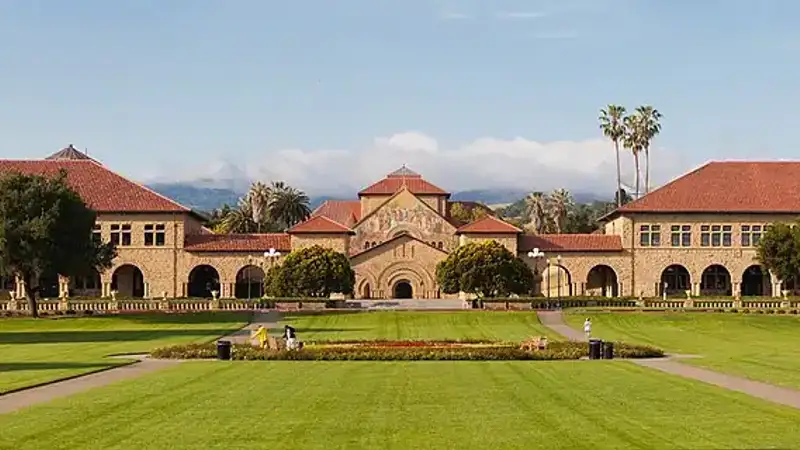
Knight-Hennessy Scholars At Stanford: The Complete Guide For Pakistani Applicants
Up to three years of fully funded graduate study at Stanford for future leaders. The numbers (87 scholars from over 9,000 applicants), the three criteria, the essays and video, the dual Stanford application and Immersion Weekend.
 Reading time19 min
 Sections33
 Updated9 October 2026
 Sources4 official
Photo: King of Hearts, CC BY-SA 3.0, via Wikimedia Commons
The 60-second version
Key takeaways · then go as deep as you like- 1Knight-Hennessy Scholars (KHS) funds up to three years of graduate study in any Stanford graduate programme, with tuition, a living stipend, travel and relocation costs.
- 2It is extremely selective: the 2026 cohort of 87 scholars came from 9,223 applications, with about 5,144 eligible after screening.
- 3You must earn your first bachelor’s degree within the last seven years (with limited exceptions) and be admitted to a Stanford graduate programme.
- 4You apply twice: to KHS (deadline 6 October 2026 for the 2027 cohort) and separately to your Stanford programme by its own deadline.
- 5KHS selects for three qualities: independence of thought, purposeful leadership and a civic mindset.
- 6Finalists are invited to Immersion Weekend at Stanford, with travel and accommodation paid.
87
Scholars, 2026 cohort
9,223
Applications, 2026 cohort
~1–2%
Selection rate
6 Oct
2027-cohort deadline

Part 1 of 6
The basics
01Knight-Hennessy In One Minute
Knight-Hennessy Scholars is Stanford University’s flagship graduate scholarship, launched in 2018 with funding from Phil Knight and others, and named after him and former Stanford president John Hennessy. It funds future leaders to study in any Stanford graduate programme, from an MBA or MS to a JD, MD or PhD.
Scholars receive up to three years of funding, take part in a leadership development programme alongside their degree, and join a small, intensely global community.
The short version
Knight-Hennessy = up to three years of fully funded graduate study at Stanford
- any Stanford graduate programme
- first bachelor’s within the last seven years
- judged on independence of thought, purposeful leadership and civic mindset.
02The Numbers
Knight-Hennessy is one of the most selective scholarships anywhere. For the 2026 cohort, KHS reported 9,223 applications, of which about 5,144 were eligible, and selected 87 scholars, its most global cohort to date.
9,223
Applications (2026 cohort)
~5,144
Eligible applications
87
Scholars selected
~1.7%
Of eligible applicants
Those numbers should shape your strategy. Apply if your profile is genuinely exceptional and you are applying to Stanford anyway; treat KHS as one part of a broader plan that also includes Fulbright, funded PhDs and other scholarships.
03What It Covers
- A fellowship applied to tuition and associated fees.
- A stipend for living and academic expenses.
- A travel stipend for one economy trip to and from Stanford each year.
- A one-time relocation stipend for new scholars.
- For second- and third-year scholars, the option to apply for additional enrichment funding (for example conference travel).
Funding lasts for up to three years of your graduate programme. If your degree is longer (for example a PhD), Stanford programme funding typically continues afterwards under normal departmental arrangements; confirm the details for your programme.
04What Stanford Costs Without Funding
Understanding the full cost explains why KHS matters so much for Pakistani applicants:
| Item | Typical annual range (graduate) | Notes |
|---|---|---|
| Tuition | Roughly $60,000–$80,000+ | Varies by programme; professional degrees cost more |
| Housing | $20,000–$30,000 | Bay Area rents are among the highest in the US |
| Food, health insurance, books and personal | $15,000–$20,000 | Insurance is mandatory |
| Total | Often $100,000+ a year | Several crore rupees each year |
Figures are rough and change every year; check Stanford’s current cost of attendance for your programme. Many Stanford PhD programmes fund their students fully, but master’s and professional degrees often do not; KHS fills that gap for scholars.

Part 2 of 6
Are you eligible?
05Eligibility
- 1You earned (or will earn) your first bachelor’s degree within the last seven years. For the 2027 cohort, that generally means 2020 or later, with limited extensions such as for military service.
- 2You apply to and enrol in a full-time graduate degree programme at Stanford.
- 3You are admitted to that Stanford programme through its own admissions process.
- 4You submit the KHS application by its deadline (1:00 pm Pacific on 6 October 2026 for the 2027 cohort).
There is no nationality restriction: Pakistani citizens are eligible. There is no requirement to have studied abroad.

Watch out: KHS admission does not admit you to Stanford. You must be admitted to your graduate programme separately; if your programme does not admit you, you cannot become a scholar.
06The Three Criteria
KHS selects scholars for three qualities, and every part of your application should provide evidence of them:
Independence of thought
You think for yourself, question assumptions and act on your own conclusions; you are curious across disciplines.
Purposeful leadership
You lead with a clear purpose, inspire others and take responsibility for outcomes.
Civic mindset
You care about the common good and act to improve communities and society.
Academic excellence is assumed rather than listed as a criterion: you must be strong enough to be admitted to a Stanford graduate programme.

Part 3 of 6
Building your profile
07The Typical Successful Applicant
Typical scholar (TeamOnline observation)
- Academics
- Excellent record; admitted to a competitive Stanford programme
- Age and stage
- Recent graduate to early-career (within seven years)
- Leadership
- Founded or led something with visible impact
- Independence
- Unusual path, original thinking or cross-disciplinary work
- Civic mindset
- Sustained commitment to a community or cause
- Story
- A coherent narrative linking past, Stanford and future
- Recommendations
- Referees with deep, specific knowledge
- Global perspective
- Ability to bring their context to a global cohort
An observation, not an official profile.
08What The Three Criteria Look Like In Practice
| Criterion | Strong evidence | Weak evidence |
|---|---|---|
| Independence of thought | You changed your mind based on evidence; you took an unusual path for a reason; you combine fields | Top grades alone; following the expected route |
| Purposeful leadership | You started or transformed something and can explain why it mattered | Titles without outcomes; leading for its own sake |
| Civic mindset | Sustained work for a community or the public good, with results | One-off volunteering; generic statements about giving back |
Pakistani applicants often have powerful material for all three: navigating institutions that do not work, building things with few resources, and serving communities in practical ways. The task is to tell those stories clearly.
09Two Applications, One Story
Because you apply to KHS and to your Stanford programme separately, you need two applications that tell one consistent story.
| Item | KHS application | Stanford programme application |
|---|---|---|
| Deadline | 6 October 2026 (2027 cohort) | Programme-specific, often December–January |
| Focus | Leadership, independence, civic mindset, who you are | Academic and professional readiness for the degree |
| Essays | KHS essay and short answers | Statement of purpose or programme essays |
| Tests | Not usually required by KHS | GRE/GMAT/LSAT/MCAT as the programme requires |
| Recommendations | Usually two, including one who knows you well | Programme-specific, often academic |
Plan both on one timeline. KHS’s October deadline comes first, so your story is shaped there; your programme statement then develops its academic side.
10Choosing Your Stanford Programme
- 1Choose the programme you genuinely want, not the one you think is easiest to get into.
- 2Check its admissions requirements, deadline and test requirements early.
- 3For PhD programmes, research faculty and labs, and contact them where appropriate.
- 4For professional degrees (MBA, JD, MD), understand that programme admissions are themselves extremely competitive.

Counsellor’s tip: Many Pakistani applicants pair KHS with an MS in engineering, computer science or an interdisciplinary programme, a PhD, an MBA or a policy degree. Your choice should follow your purpose.
11Stanford Programmes Pakistani Applicants Pursue
| Programme type | Examples | Admissions notes |
|---|---|---|
| Engineering and computing | MS/PhD in Computer Science, Electrical Engineering, Management Science & Engineering | GRE often optional or not required; check each department; strong projects matter |
| Business | MBA (Graduate School of Business) | GMAT or GRE; work experience central |
| Education and policy | MA in Education, International Policy (MIP), Public Policy | Professional or research experience valued |
| Earth, energy and environment | MS/PhD in Earth System Science, Energy Science & Engineering | Research fit and faculty contact |
| Law and medicine | JD, MD | Very competitive professional admissions; LSAT/MCAT |
| Humanities and social sciences | PhD programmes | Writing sample and research fit |
Choose the programme that serves your purpose. KHS readers want to see why that degree, at Stanford, is the next step in your story.

Part 4 of 6
The application
12The KHS Application Components
Requirements are published each year on the KHS site. Expect:
| Component | Purpose | Tips |
|---|---|---|
| Résumé | Your record in one page or two | Prioritise impact and leadership |
| Essay | A reflective personal essay on a prompt | Tell a true story that reveals how you think |
| Short-answer questions | Quick insights into your values and curiosity | Be specific and genuine |
| Video statement | A short video introducing yourself | Natural, clear, unscripted-sounding |
| Recommendations | Usually two | Choose referees who know you deeply |
| Transcripts and test scores | Academic record | Upload accurately |
 Want a counsellor to check your plan?Free, and we reply within one working day.
13Writing The KHS Essay
KHS essays are about who you are, not what you have done. The best ones are reflective and specific, and they reveal independent thinking.
Pick one real story
A moment that changed how you think or act.
Show your thinking
What you noticed, questioned and decided, especially when others disagreed.
Show action
What you did as a result.
Show growth
How it shaped your purpose and what you want to do next.
Example
- Weak“I have always wanted to make a positive impact on the world through technology.”
- Stronger“When my university’s exam results portal crashed for the third time, I stopped complaining and read its code. The bug was trivial; the real problem was that nobody owned the system. I spent a semester convincing the registrar to let students maintain it, and that taught me more about institutions than any class.”
14A Sample KHS Essay Excerpt
Excerpt (fictional applicant)
The bug took me twenty minutes to find. Persuading the registrar to let students fix it took five months.
Our university’s results portal crashed every exam season, and every season the same email went out asking for patience. In my third year I read the portal’s code, found a database query that locked the whole system, and wrote a fix. Then I learned the real lesson: nobody would deploy it, because nobody owned the system. The vendor’s contract had ended, IT staff had no access, and the registrar had never been asked to make a decision about software.
I stopped arguing about code and started mapping decisions: who could approve a change, who would be blamed if it failed, and what each person needed to say yes. I organised a pilot during a low-traffic week, recruited two faculty members to supervise, and wrote the governance document no one had asked for. The fix went live that summer; the following exam season, the portal stayed up.
I now think most problems I care about look like this: the technical part is the easy part. At Stanford I want to study how institutions adopt technology, in the Management Science and Engineering programme, so that I can help Pakistani public institutions build systems that someone actually owns.
It shows independence of thought (seeing the real problem), purposeful leadership (organising a pilot and governance) and civic mindset (public institutions), through one specific story.
15Short-Answer Questions
KHS includes short-answer prompts that reveal your curiosity and values. They are short, so specificity matters more than polish.
- Answer the question asked, directly, in the first sentence.
- Use concrete details: a book, a person, a place, a moment.
- Let your personality show; KHS reads thousands of interchangeable answers.
- Keep each answer consistent with your main essay and résumé.
16The Video Statement
The video statement is short. KHS wants to meet you, not watch a production.
- Plan three points, not a script.
- Record in a quiet place with natural light; a phone is fine.
- Speak to the camera as if to a curious person, not an audience.
- Show something of your personality and context, including Pakistan.
- Re-record a few times, but keep it natural.
17Recommendations
Choose recommenders who can write about your independence of thought, leadership and civic mindset with specific examples. A recommender who has watched you lead through a difficult project is worth more than a famous name who barely knows you.
- 1Brief each recommender on the three KHS criteria.
- 2Share your essay and résumé.
- 3Remind them of specific stories they witnessed.
- 4Give them at least a month before 6 October.

Part 5 of 6
Selection and after
18Immersion Weekend
Finalists are invited to Immersion Weekend at Stanford, usually early in the year. KHS covers reasonable travel, lodging at Stanford and meals on campus.
The weekend combines interviews, group activities and conversations with faculty, staff and scholars. It is designed to see how you think and engage with others, and to let you experience the community.
- 1Be curious: ask questions and engage with other finalists, not just interviewers.
- 2Prepare to discuss your essay, your purpose and current issues.
- 3Expect group discussions where listening matters as much as speaking.
- 4Plan visa travel early: a US visitor visa can take time to obtain from Pakistan.
Watch out: US visitor visa appointments in Pakistan can involve long waits. If you are a likely finalist, find out the current wait time early and talk to KHS if you have a problem.
19Preparing For Immersion Weekend
- 1Re-read your entire application, including the video and short answers.
- 2Prepare to discuss your purpose and how it has evolved, with examples.
- 3Read about issues in your field and in the world; discussions can be wide-ranging.
- 4Practise group discussion: listen, build on others’ ideas, disagree respectfully.
- 5Plan logistics: US visitor visa, flights and time zones; KHS covers reasonable travel costs.
- 6Bring curiosity: ask scholars and staff about their experiences.
 Invited to Immersion Weekend? Practise interviews and group discussions with feedback.
20Timeline For The 2027 Cohort
- 1
Spring–summer 2026
Prepare
Choose programme; tests if required; draft essay.
- 2
June 2026
Application opens
KHS application available.
- 3
6 October 2026, 1:00 pm Pacific
KHS deadline
Submit the KHS application.
- 4
December 2026–January 2027
Programme deadlines
Submit your Stanford programme application.
- 5
Early 2027
Immersion Weekend
Finalists invited to Stanford.
- 6
Spring 2027
Decisions
Scholars announced, subject to programme admission.
- 7
Autumn 2027
Start
Join the cohort at Stanford.
21After Selection: F-1 Visa And Arrival
Knight-Hennessy scholars usually study on an F-1 student visa (unlike Fulbright’s J-1, there is generally no two-year home residency requirement attached to KHS itself). You will receive your I-20 from Stanford and apply at the US Embassy in Islamabad or the Consulate in Karachi.
Scholars take part in KHS’s leadership development programme throughout their time at Stanford, alongside their degree.

Part 6 of 6
Strategy
- 22Planning Your Stanford Programme Application
- 23Questions Pakistani Applicants Ask
- 24Three Composite Case Studies
- 25Interview Question Bank
- 26Your Final 30 Days Before 6 October
- 27Advice By Degree Type
- 28The KHS Leadership Programme
- 29The F-1 Visa Interview
- 30Life At Stanford
- 31Common Mistakes
- 32Knight-Hennessy vs Other US Routes
- 33How TeamOnline Helps
22Planning Your Stanford Programme Application
Your programme application usually comes due after the KHS deadline, often in December or January. Use the time well:
- 1
October
After KHS submission
Finalise programme choice and test plans.
- 2
November
Statement of purpose
Academic and professional readiness for the degree.
- 3
November–December
Recommendations
Programme letters, often academic.
- 4
December–January
Submit
By the programme deadline.
Admission to your programme is decided by the department, independently of KHS. A strong programme application matters as much as a strong KHS application.
23Questions Pakistani Applicants Ask
| Question | Short answer |
|---|---|
| Do I need to be famous or have a big title? | No. KHS looks for independence, purpose and civic mindset at your stage, not fame. |
| Can I apply to KHS for a PhD? | Yes; KHS funds up to three years, and Stanford PhD funding typically continues afterwards. |
| Does KHS consider financial need? | No; selection is not based on need. |
| Can I apply if I graduated eight years ago? | Generally no; the seven-year rule applies with limited exceptions. |
| Do Pakistani applicants have a disadvantage? | No. KHS’s cohorts are deliberately global; strong Pakistani applicants compete on the same criteria. |
Want a counsellor to check your plan?Free, and we reply within one working day.
24Three Composite Case Studies
These are composites based on the kinds of applicants we see, not real people. They show how different profiles can make a strong KHS case.
Case 1: the builder
- BackgroundComputer engineer from Peshawar, 3 years at a fintech start-up.
- IndependenceLeft a stable bank job to build mobile payments for traders who distrust banks; designed onboarding in Pashto.
- LeadershipGrew the team from 3 to 25; set up the company’s first data-privacy policy.
- Civic mindsetVolunteers teaching coding to girls through a community centre.
- Stanford programmeMS in Management Science & Engineering.
- Why it worksA clear thread from inclusion to institutions to technology.
Case 2: the reformer
- BackgroundDoctor from Multan, 4 years in public hospitals, now in health policy.
- IndependenceChallenged a vaccination target system that rewarded easy cases; proposed outcome-based metrics.
- LeadershipLed a district team through a measles outbreak response.
- Civic mindsetRuns free clinics with peers on weekends.
- Stanford programmeMaster’s in health policy-related programme or MD-PhD pathway research.
- Why it worksEvidence of thinking differently inside a rigid system.
Case 3: the researcher
- BackgroundEconomics graduate from Lahore, 2 years at a policy think tank.
- IndependenceBuilt an open dataset on provincial spending when none existed.
- LeadershipRecruited 40 student volunteers to digitise budget documents.
- Civic mindsetPublishes plain-language budget explainers read by journalists.
- Stanford programmePhD in Economics or Political Science.
- Why it worksOriginal initiative, public value and a research agenda.
25Interview Question Bank
| Question | What it tests | How to approach it |
|---|---|---|
| Tell us about a belief you changed. | Independence of thought | A real reversal, with the evidence that changed your mind |
| What is a problem everyone accepts that you don’t? | Independence | Specific, reasoned, and modest about uncertainty |
| Describe a time you led without authority. | Leadership | How you persuaded people, not what title you had |
| What did you learn from a failure? | Reflection | Own it; show what you changed afterwards |
| Who is your community, and what do you owe it? | Civic mindset | Concrete people and actions, not slogans |
| Why Stanford, and why this programme? | Purpose and fit | Specific resources and how they serve your plan |
| How would you explain your work to a 12-year-old? | Clarity | Simple language, one good example |
| What would you do with an extra year and no constraints? | Curiosity | Show what genuinely excites you |
| Disagree with something said in this discussion. | Respectful independence | Build on others’ points; disagree with reasons |
| What does Pakistan teach the world? | Perspective | An insight from your context with wider relevance |
26Your Final 30 Days Before 6 October
- 1
Day 30
Full draft
Essay, short answers and résumé complete; recommenders already briefed.
- 2
Day 25
Outside read
Two readers who don’t know you well; ask what they remember.
- 3
Day 20
Video
Record several takes; choose the most natural.
- 4
Day 14
Recommenders
Polite reminder with your final essay attached.
- 5
Day 7
Consistency check
Résumé, essay and answers tell one story.
- 6
Day 3
Submit
Submit early; time zones mean 1:00 pm Pacific is late night in Pakistan.
27Advice By Degree Type
| Degree | KHS angle | Programme angle |
|---|---|---|
| MS (engineering, CS, MS&E) | Purpose beyond the technical: who will your work serve? | Projects, strong grades, sometimes research |
| PhD | How your research connects to a civic purpose | Research fit, faculty, publications, letters |
| MBA | Leadership with purpose, not just career progression | Work achievements, GMAT/GRE, essays |
| Policy and education master’s | Civic mindset is natural; show independence | Professional experience and writing |
| JD / MD | Why law or medicine as a tool for change | LSAT/MCAT and very competitive admissions |
28The KHS Leadership Programme
Alongside their degrees, scholars take part in KHS’s leadership programme: regular sessions, workshops, retreats and conversations with leaders across sectors, plus small-group work with scholars from other disciplines. Scholars describe the cross-disciplinary cohort as the defining feature: an engineer, a doctor, a lawyer and an artist working on the same problem.
29The F-1 Visa Interview
- 1Bring your I-20, SEVIS fee receipt, DS-160 confirmation, passport and KHS award letter.
- 2Explain your programme and its purpose in two sentences.
- 3Show funding clearly: the KHS award covers your costs.
- 4Answer honestly about your plans after graduation.
- 5Book early; appointment waits in Pakistan can be long.
30Life At Stanford
Stanford’s campus is large and residential, with graduate housing available for many students. The Bay Area is expensive but rich in opportunity, from technology companies to policy institutes and start-ups. Pakistani graduate students often connect through the Pakistani Students Association and wider South Asian communities on campus.
31Common Mistakes
| Mistake | Fix |
|---|---|
| Treating KHS as an academic scholarship only | Show independence, leadership and civic mindset |
| A KHS essay that reads like a statement of purpose | Make it personal and reflective |
| Forgetting the separate programme application | Plan both deadlines from the start |
| Generic recommendations | Brief recommenders on the criteria |
| Scripted video | Speak naturally from notes |
| Missing the seven-year rule | Check your graduation date first |
32Knight-Hennessy vs Other US Routes
| Route | Who it suits | Key difference |
|---|---|---|
| Knight-Hennessy | Exceptional future leaders admitted to Stanford | Extremely selective; up to three years funded |
| Fulbright (USEFP) | Pakistani master’s and PhD applicants with a Pakistan plan | Fully funded; J-1 return requirement; IIE placement |
| Funded PhD with assistantship | Research-focused applicants | Department funding; apply directly |
| University aid and fellowships | Strong applicants to specific universities | Merit or need-based |
For most Pakistani applicants, KHS should sit alongside Fulbright and direct PhD or master’s applications, not replace them.
33How TeamOnline Helps
Profile review
An honest view of your KHS and Stanford chances.
Programme strategy
Choosing the Stanford programme and backups.
Essays and video
Reflective writing and a natural video.
Recommender briefing
Letters that speak to the three criteria.
Programme application
Statement of purpose and tests.
Immersion and visa
Preparation for the weekend and US visas.
Aiming for Stanford as a Knight-Hennessy Scholar? Start with a free profile review.
 You’ve reached the end
The fastest next step: send us your profile and we’ll tell you honestly where you stand.
Sources
Figures come from these official and published sources. Profile notes are TeamOnline’s own observation.
- 1Knight-Hennessy Scholars: application deadlines (official)knight-hennessy.stanford.edu
- 2Knight-Hennessy Scholars: eligibility (official)knight-hennessy.stanford.edu
- 3Knight-Hennessy Scholars announces 2026 cohort of 87 new scholars (press release)knight-hennessy.stanford.edu
- 4Al-Fanar Media: Knight-Hennessy scholarships open (2026)al-fanarmedia.org
Rules, deadlines and requirements change. Check the current requirements on official pages or with a counsellor before you apply.
Quick answers
Frequently Asked Questions
01Can Pakistani students apply for Knight-Hennessy?
Yes. There is no nationality restriction; you must meet the seven-year graduation rule and be admitted to a Stanford graduate programme.
02How many people win Knight-Hennessy?
The 2026 cohort had 87 scholars from 9,223 applications (about 5,144 eligible).
03When is the Knight-Hennessy deadline?
For the 2027 cohort the deadline was 6 October 2026 at 1:00 pm Pacific. Your Stanford programme has its own, later deadline.
04What does Knight-Hennessy cover?
Tuition and fees, a living stipend, an annual travel stipend and a one-time relocation stipend, for up to three years.
05Do I need the GRE for Knight-Hennessy?
KHS itself does not usually require tests, but your Stanford programme may require the GRE, GMAT or another test.
06What is Immersion Weekend?
A finalist weekend at Stanford with interviews and activities; KHS covers travel, lodging and meals.
Keep reading
More Deep Dives
 Scholarship deep dive
Chevening Scholarship From Pakistan: The Complete Guide (Eligibility, Essays, Interview, Success Rates)
27 min read
 Scholarship deep dive
Fulbright Scholarship From Pakistan: The Complete Guide to USEFP Master’s and PhD Awards
27 min read
 Scholarship deep dive
Commonwealth Scholarships From Pakistan: The Complete Guide to Master’s and PhD Awards Through HEC
26 min read
Free consultation
Turn this guide into a plan for you.
30 minutes, no fee, no obligation. In our Lahore office or on WhatsApp video.
- ReplyWithin one working day
- Since2009
- Students2,500+ advised

Book your free session
We only use your number to reply to you.